How to Spot AI‑Generated Videos: Why Detection Now Depends on Human Judgement, Not Visual Clues
Feb 25

Get in touch with our HRM Specialists
The challenge in 2026 is no longer identifying poor-quality deepfakes.
It is understanding why highly realistic AI-generated videos are trusted even when nothing explicitly looks wrong.
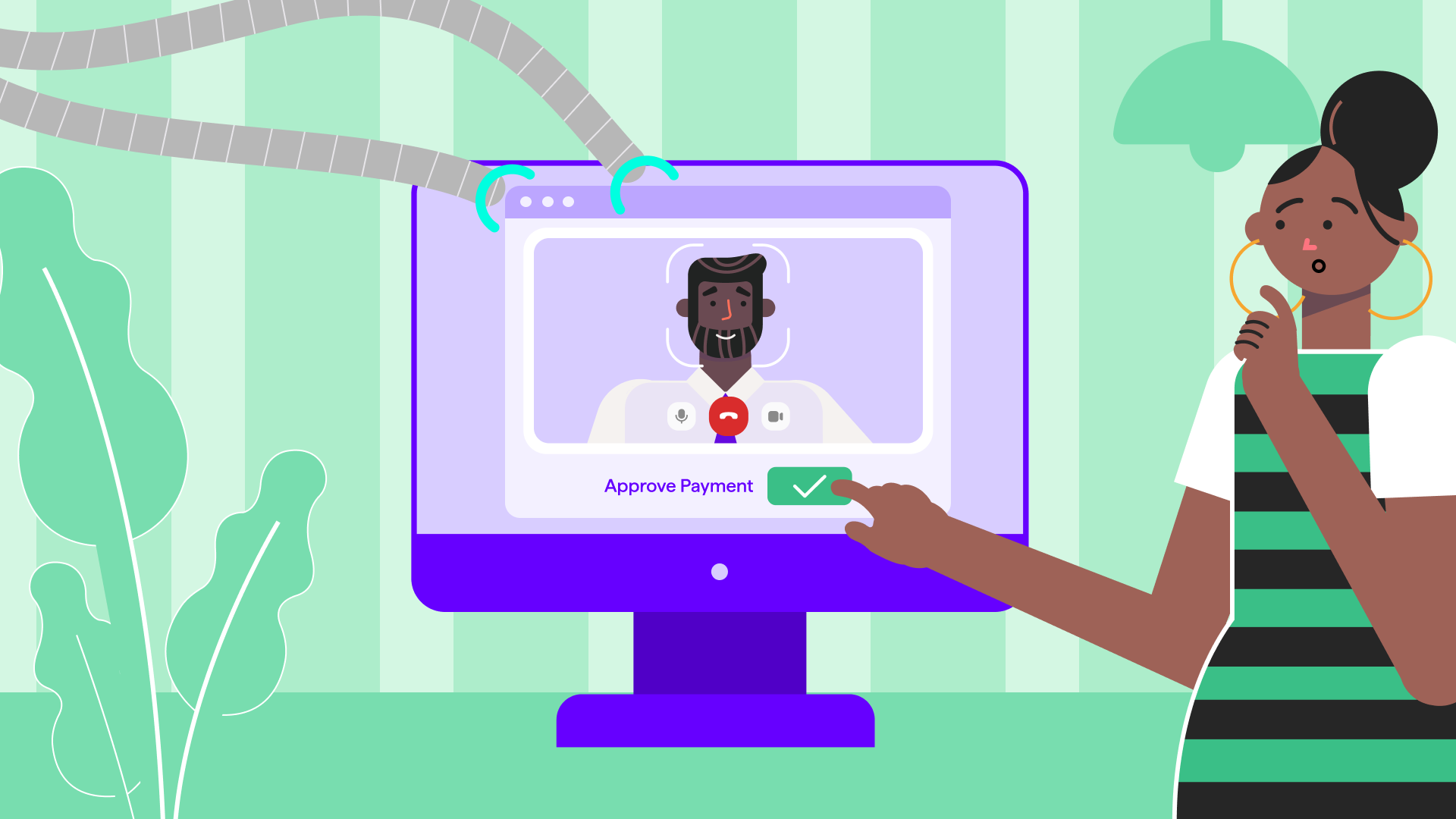
Synthetic video risk now emerges in routine organisational moments: a familiar executive appearing on a video call, a trusted vendor sending a short confirmation clip, or a “quick approval” requested under urgency. As generative video tools compress production time and increase contextual realism, detection shifts away from visual artefacts toward human judgement under pressure.
This analysis reframes AI video detection as a behavioural and organisational risk problem, not a visual literacy issue. It examines how modern AI videos are created, why traditional spotting advice fails, and what enterprises must measure, train, and design for as synthetic video becomes operationally usable by attackers.
How AI-generated videos became believable at work
Not long ago, AI-generated video felt like a tech curiosity, something you’d see in a flashy demo but luckily never in your inbox. That is no longer true. Today, synthetic videos aren’t just better; they’re believable, and that makes all the difference in workplaces where trust and speed drive decisions.
Part of the reason is the sheer volume and sophistication of these fake clips. Deepfakes now show up in around 6.5% of fraud cases globally, that’s about 1 in 15 attacks, and this figure has jumped a staggering 2,137% since 2022. That’s not a slow uptick, that’s a massive wave.
What’s even more concerning is how poorly we humans perform when tasked with spotting them. In controlled tests, people could correctly identify high-quality deepfake videos only 24.5% of the time, which means that viewers are being fooled more often than not. Even when performance improves in image-based tests, the failure rate still sits at 38%, which in a corporate environment means more than one in three decisions about authenticity could be incorrect. In audio experiments, participants believed they were around 73% accurate, yet were repeatedly misled by subtle machine-generated cues. The bigger risk isn’t just misjudgment, it’s overconfidence.
These numbers further align with global findings. The 2026 International AI Safety Report, cited by The Guardian, notes that AI-generated content has become harder to distinguish from real media compared to just a year earlier. In early 2025, 46% of deepfake incidents used video as the primary medium, and Cyble reports that over 30% of high-impact corporate impersonation attacks involved AI-powered deepfakes.
In real organisations, these two forces collide: deepfake videos are becoming common enough to be weaponised, and we’re surprisingly bad at detecting them. That’s why these videos “work” - not because they look perfect, but because they feel right to human viewers when they arrive in the middle of real workflows.
How modern AI videos are actually built
To understand why AI-generated videos are now so convincing, it helps to break down how today’s synthetic content is created. Modern deepfake systems don’t just copy a face, they build an entire believable scenario that feels “normal” to human viewers.
Identity Seeding
Enterprise attackers kick off with easy public data dumps, like LinkedIn headshots, conference recordings, podcasts, and earnings call videos. Modern AI models ingest this material to map facial structure, skin tone, voice quality, and subtle visual quirks from multiple angles. No insider access is needed. The more high-quality material available online, the sharper and more believable the synthetic identity becomes. This seeding phase is the foundation; without it, the illusion collapses.
Behavioural Cloning
Once the identity looks right, AI shifts focus to behaviour. Models learn how a person speaks, pauses, emphasises points, and projects confidence by analysing real recordings. These patterns are then reproduced in synthetic video, making the speaker feel familiar rather than artificial. This is why deepfake videos often “sound exactly like” the real person, and why people trust the delivery before questioning the request.
Contextual Stitching
AI weaves the clone into realistic settings: office backdrops, situation-specific jargon, lighting, urgency cues like "urgent wire transfer." Tools blend edges seamlessly, tricking your brain into thinking they fit your workflow and instantly lowering skepticism. The video is then placed into a believable organisational moment. AI layers office-style backgrounds, internal language, realistic lighting, and urgency cues that match everyday work scenarios. The result doesn’t feel staged - it feels routine. When content fits naturally into existing workflows, people stop asking why it exists at all. Context does most of the convincing before logic has a chance to intervene.
Multimodal Layering: Finally, everything is synchronised. Facial movement, voice delivery, timing, and narrative flow are generated together, so nothing feels out of sync. Audio reinforces visuals, expressions match tone, and pacing feels human. Research shows that when these signals align, humans struggle to spot manipulation. The interaction feels coherent, credible, and real, even when it isn’t
Why people fail to spot AI videos even when nothing looks wrong
The uncomfortable truth about AI-generated video isn’t that it’s invisible. It’s that most of the time, we’re not actually looking for it.
Humans don’t inspect content by default, we respond to it. Research published by CACM shows that when people are asked to distinguish real media from AI-generated media, performance sits at or near chance, around 51%. In other words, our gut instinct is barely better than flipping a coin. Even more telling: participants who claimed they were familiar with deepfakes didn’t perform any better than those who weren’t. Familiarity breeds confidence, not accuracy!
This is where familiaridentities short-circuit doubt. When a face looks like a colleague, a manager, or a known executive, our brains switch from verification mode to trust mode. Studies consistently show that people overestimate their ability to detect manipulation and rely heavily on recognition and social cues instead of deliberate checks. If the person “looks right” and “sounds right,” critical thinking often gets switched off.
Add authority and urgency, and verification collapses altogether. Requests framed as time-sensitive or coming from leadership trigger automatic compliance behaviours, especially in professional environments where responsiveness is rewarded.
Finally, multimodal realism breaks checklist thinking. Research on audiovisual deepfakes shows humans perform significantly worse when video and audio are presented together. Our brains process these cues as a single coherent experience, not as separate elements to be analysed. Simple red flags like pixel glitches, odd lighting, unnatural motion, fail when everything aligns just well enough.
The result? AI videos don’t need to deceive the eye. They just need to fit the moment. And that’s exactly why they work.
How to spot AI generated videos (it's not pixel peeping anymore)
If you’re still trying to spot AI videos by squinting at faces or hunting for visual glitches, you’re already playing the wrong game. Modern deepfakes don’t fail because they look fake, they succeed because they make sense in the moment. Spotting them today is less about seeing better and more about thinking differently.
- Question why the video exists, not how realistic it looks
Ask why a message needed to arrive as a video in the first place. In real organisations, urgent or sensitive requests usually follow established channels. When the format feels unnecessary, the medium itself becomes the first warning sign. - Look for mismatches between emotional tone and organisational stakes
Pay attention when calm, confident delivery clashes with high-risk or time-critical requests. Real pressure often shows friction. Perfect composure during urgent scenarios can be a sign of performance rather than reality. - Notice when interaction is replaced by performance
Be cautious when a video delivers instructions without space for questions, discussion, or verification. One-way communication that feels staged rather than conversational should raise suspicion. - Be alert to requests that arrive fully formed and discourage verification
Requests that bypass normal checks, reference urgency, or suggest “handling it later” are designed to shut down critical thinking and speed up compliance. - Treat unsolicited video as a risk signal
Unexpected video messages, especially those asking for action, should now be treated as potential threats and not trusted by default, regardless of how familiar the face appears. - Pause and think before you act
The most effective defence isn’t sharper vision, but better decision-making. Pausing to question context and intent matters more than spotting technical imperfections.
From a technical standpoint, many organisations now rely on specialised detection tools such as Reality Defender, Hive, Sensity, Truepic, and Intel’s FakeCatcher to identify signals associated with synthetic or manipulated media. These platforms analyse visual artefacts, audio inconsistencies, and metadata patterns that may indicate AI generation. While such tools are an important layer of defence, they have a fundamental limitation: they react to what already exists. As generative models improve, attackers adapt faster than detection rules can be updated. Detection will always be a step behind creation, which is why tools alone cannot carry the full burden of defence. That’s why unsolicited video itself should now be treated as a risk signal, not proof.
The real defence isn’t choosing between humans or tools - it’s understanding that behaviour is the root cause of failure. Tools can flag content. Only people can decide whether to act.
Which is exactly where the next question begins: how do you trainjudgment thatholds up under pressure? That’s where OutThink comes in.
How OutThink addresses awareness for AI video risk
By now, it should be clear that AI-generated video isn’t slipping through defences because people can’t see the problem. It slips through because people are forced to decide under pressure. That’s why awareness alone doesn’t work.
AI video risk is fundamentally behavioural, not visual. Most failures don’t happen because employees lack knowledge. They happen because authority cues, urgency, and familiar context override training in the moment. One-off sessions and generic awareness programmes rarely change how people react when it matters.
This is where OutThink is different.
OutThink’s Human Risk Management platform focuses on how people actually behave, not what they can recall from training. Instead of delivering content and hoping it sticks, OutThink continuously measures and reduces risk by analysing real decision patterns.
How OutThink does this:
- Targets human behaviour - the root cause of most breaches
OutThink identifies risky behavioural patterns rather than treating incidents as isolated mistakes. This, in turn, enables early intervention before impact. - Adaptive and personalised training
Learning paths adjust in real time based on individual behaviour and risk signals, making training relevant, timely, and far more effective. - AI-powered feedback loops
Immediate, context-aware nudges help people correct their decisions while the experience is still fresh. This helps in reinforcing better judgment at the point of risk. - Quantifies human risk holistically
By combining identity, attitudes, and observed behaviour, OutThink gives leaders a clear, actionable view of organisational vulnerability. - Role-specific, behaviour-based engagement
Training aligns to roles and real threat scenarios, improving retention and real-world application.
As AI-generated video becomes more realistic, faster, and easier to deploy, a convincing video will no longer be proof of legitimacy. Detection tools will help, but they will always lag behind attackers. What endures is judgment - the ability to stop, question context, and interrupt the normal thought process when something doesn’t quite belong.
In that future, human judgment becomes the last durable security control.
Human judgement is the only saviour
AI-generated video will continue to improve, not in quality alone, but in fit. It will arrive faster, appear more casual, and blend more seamlessly into everyday work. As synthetic presence becomes easier to generate, seeing will no longer function as a reliable signal of authenticity.
Detection technologies will remain useful, but they will lag by design - reacting to patterns that attackers constantly refine. The real shift will be in how organisations prepare their people, not how well they train them to recognise artefacts.
Preparation means building judgment that survives pressure. It means helping people pause, question context, and interrupt familiar authority when something doesn’t quite belong. It means measuring how decisions unfold in real moments, not how well guidance is remembered in calm ones.
In a world where video can be manufactured on demand, human judgment becomes the most resilient layer of defense.
This is where Human Risk Management matters.
Platforms like OutThink focus on strengthening decision-making over time - measuring how people actually respond, reinforcing verification behaviour, and helping organisations reduce risk before incidents escalate into real damage.
Sources
- https://www.signicat.com/press-releases/fraud-attempts-with-deepfakes-have-increased-by-2137-over-the-last-three-year#:~:text=Despite%20the%20increase%20in%20AI,a%20multi%2Dlayered%20protection%E2%80%9D.
- https://deepstrike.io/blog/deepfake-statistics-2025
- https://www.theguardian.com/technology/2026/feb/03/deepfakes-ai-companions-artificial-intelligence-safety-report
- https://www.resemble.ai/wp-content/uploads/2025/04/ResembleAI-Q1-Deepfake-Threats.pdf
- https://cyble.com/knowledge-hub/deepfake-as-a-service-exploded-in-2025/
- https://pmc.ncbi.nlm.nih.gov/articles/PMC11157519/
- https://www.zerofox.com/glossary/deepfake-detection/
- https://www.zerofox.com/glossary/deepfake-detection/
- https://microblink.com/resources/glossary/video-deepfake-attacks/
- https://rsisinternational.org/journals/ijrias/articles/deepfake-detection-using-multimodal-ai/
- https://cacm.acm.org/research/as-good-as-a-coin-toss-human-detection-of-ai-generated-content/
- https://www.sciencedirect.com/science/article/pii/S2589004221013353
- https://arxiv.org/abs/2405.04097
Get in touch with our HRM Specialists
Experience OutThink
Get in touch with our HRM Specialists
Security Awareness vs Secure Behaviour: Why Training Fails and What Actually Reduces Human Cyber Risk

Shadow AI and Human‑Driven GenAI Risk: Why Organisations Need Human‑Centric AI Governance in 2026

How Security Behaviour & Culture Programs (SBCP) Actually Change Cybersecurity Outcomes
How to Spot AI‑Generated Videos: Why Detection Now Depends on Human Judgement, Not Visual Clues
Human-Centric Cybersecurity: Why Secure Behaviour Is the New Security Perimeter
What Makes a Human Risk Management Platform Effective in 2026
How AI Is Supercharging Smishing – and What Can Actually Prevent It
Behaviour vs Recognition: The Real Skills Security Awareness Training Must Build for Effective Cyber Resilience
Beyond Detection: The New Model for Deepfake Awareness Training
Deepfake Phishing Simulations: The New Battleground for Cybersecurity Teams
Why Most Phishing Training Programs Fail - And the Best Phishing Simulation Tools to Turn Them Around
GenAI and the Illusion of Control: Why Enterprise Software Is Quietly Undermining Data Security
2026 Ultimate Guide to AI Security Training Platforms & Tools

The Best Proofpoint Alternatives & Competitors in 2026: What to Choose (and Why)
The Best Adaptive Security Alternatives & Competitors in 2026
The Best Hoxhunt Alternatives & Competitors in 2026
The Best KnowBe4 Alternatives & Competitors in 2026: What to Choose (and Why)
The Best MetaCompliance Alternatives & Competitors in 2026
The Best SANS Security Awareness Alternatives & Competitors in 2026
The Best Infosec IQ Alternatives & Competitors in 2026
The Best Cofense Alternatives & Competitors in 2026

The Best Mimecast Alternatives & Competitors in 2026
Designing Human-Centric Cybersecurity
Beyond Tools - The Human Factor in Cybersecurity
The Misaligned Incentives of Cybersecurity : Lessons from Healthcare

Human Risk Management and ISO 27001

There are (at least) Three Ways You Should be doing SAT Campaigns Differently (Part 2)

There are (at least) Three Ways You Should be doing SAT Campaigns Differently (Part 1)

Slid into my DMs: The rise of AI Phishing Influencers

Beyond Passwords: Inside the Largest Credential Leak in History
Practical Guide to COM-B
Building the Foundation: The Crucial Role of Security Culture in Today's Organizations

How to Build and Sustain a Successful Security Champions Program
It’s Time to Make Peace With Imperfection in Cybersecurity Human Risk Management

Why I Refused to Say “People Are the Weakest Link in Cyber”

Can Your People Outthink a Deepfake?

Trusting HTTPS Could Be Your Biggest Mistake - Here’s Why
The Human Risk Behind Scareware Attacks

Why Whaling Attacks Are the Caviar of Cybercrime
Biometrics Are Here: Are We Ready for the Human Risks?
I’m a Human Risk Manager (I Think?)

How Microsoft’s ‘Passwordless by Default’ Might Save Security

The Cyber Risk Within: Insider Threats

What Is ‘Human Risk’ in Cyber?

What if Agentic AI Could Stop Human Risks Before They Happen?

How to Run a Cybersecurity Awareness Training Program in Academia
Phishing in 2025: Cybercriminals Are Smarter Than You Know

Why Cybersecurity Human Risk Management Benefits CISOs
The Strategic Role of Adaptive Security Awareness Training Content
Cybersecurity's Comfort Zone Problem
Turning Employees into Payment Security Champions: Your Guide to Free PCI Awareness Training
AI Phishing: The Rising Threat of Intelligent Cyber Deception

What Maslow’s Hierarchy of Needs Reveals About Cybersecurity Flaws
Smishing: The Phishing Attack That Lives in Your Pocket
How Adaptive Security Awareness Training Drives Better Cybersecurity Outcomes: The Science

Quishing: When QR Codes Become Cyber Traps - Your Essential Guide to Protection
Domain Spoofing: The Cyber Trick You Can’t Afford to Ignore
PIPEDA Compliance: Why PIPEDA Training is Important
CCPA Training: Building a Culture of Privacy and Compliance

Data Privacy Week: How Convention 108 Paved the Way for Modern Privacy Laws
TISAX Training: Strengthening Automotive Information Security and Compliance

GDPR Training: Building a Culture of Compliance
What Is DORA? DORA Training for Compliance

Risk Quantification for Cybersecurity Human Risk Management

Adaptive SAT: The Future Is Now

NIST Recommends New Guidelines for Password Security
Empowering Organizations with Adaptive Security Awareness Training
Why Humans Should Be the New Frontline in Cyber Defense
Behavioral Analytics Are Changing Cybersecurity

Cybersecurity Awareness Month 2024: Your Security Journey Doesn't End Here
Cybersecurity Awareness Training for Remote Workforces
Would You Skip an Update if You Knew What It Could Cost You?
Why Every Cyber Strategy Fails Without This Element
Your Password Isn't Enough: Why Your Digital Life Needs Multifactor Authentication Today
Is Your Cybersecurity Working From Home Too?
Human Risk Management Gets Adaptive

Your Cybersecurity Is Only as Strong as Your People
The Email That Could Cost You Everything: Your Essential Guide to Recognizing Phishing in 2024
How Ready Is Your Workforce for a Real Phishing Attack?
What is Cybersecurity Human Risk Management? What You Need to Know

Engagement Strategies for Cybersecurity Human Risk Management

Enhance Your Phishing Training With Outthink
Adaptive Security Awareness Training for Frontline Workers
The Role of Security Awareness Training After IT Outages

Human Risk Management's Eight Dimensions of Secure Behavior Segmentation
State-Sponsored Phishing Attacks Target 40,000 Corporate Users: What This Means for Protecting Your Business

Adaptive Security Awareness Training: Unlearning and Relearning Routines
Did You Think Your Password Was Secure? Let’s Talk Password Security

Rethinking Security Awareness: Towards a Cybersecurity Human Risk Management Framework
Password Security: Why the UK is Banning Generic Passwords

Instagram Security Awareness Training: A Step-by-Step Guide

Cybersecurity Human Risk Management Forum Kicks Off in London