Why Most Phishing Training Programs Fail - And the Best Phishing Simulation Tools to Turn Them Around
Jan 23

Get in touch with our HRM Specialists
Introduction
Your phishing training problem probably isn’t working, not because your employees are careless, but because most enterprise phishing training is designed to look effective and not change the behaviour.
Organisations are spending tens and thousands of dollars annually on phishing training programs that truly look impressive on paper but fail spectacularly in practice. The metrics we track, like completion rates or click rates, are just a facade. They tell us nothing about whether employees will actually spot a real phishing attempt when it matters.
What this article explains:
- Why phishing attacks still disrupt enterprise security: the human biases behind modern multi-stage attacks - a look into how attackers exploit predictable psychology to bypass even advanced defences.
- Why traditional phishing training and generic simulations fail to change real-world behaviour, even when completion rates look good
- What recent research says about how enterprises should evaluate phishing simulation tools beyond features and vanity metrics
- How organisations can actually reduce phishing risk by focusing on behaviour, decision-making, and reporting under pressure
- A look at the top 8 phishing simulation tools for enterprises in 2026 and how they stack up when assessed through a behavioural lens.
Why phishing attacks still disrupt enterprise security: the human biases behind modern multi-stage attacks
Modern security tools have become remarkably good, yet phishing persists. Why? Because trackers have stopped targeting technology and started exploiting humans. US. Our psychology. They’ve mastered manipulation that combines authenticity, urgency and personalisation to bypass our mental barriers.
The most effective phishing attacks today are social engineering attacks. These attacks appear to come from inside the organisation. They feel too internal and familiar, using trusted names or everyday requests, and exploit our natural instinct to be helpful. But email is just the beginning. Today's attackers create multi-stage campaigns: a benign email, then a Slack message, a Zoom meeting, a phone call referencing earlier conversations, maybe even a deepfaked call. Each touchpoint builds legitimacy until the malicious request, ‘approve this payment’, feels completely reasonable.
Phishing attacks hit record numbers in 2025. Over 1 million attacks in Q1 alone, jumping to 1,130,393 by Q2, a whopping 13% increase in three months. Infostealer payload delivery via phishing rose 84% in 2024, and higher rates are expected to continue this year.
So why are organisations still losing this fight despite spending billions on security awareness programs?
Why phishing simulation fails: from checkbox compliance to real-world behaviour
Most security teams assume that the solution to phishing is training/education. You train people better, test them more often and make them more aware. This does make sense, somewhat. Except the data tells a completely different story.
Researchers at UC San Diego Health ran one of the most comprehensive phishing studies: eight months of research, over 19,500 employees and thousands of simulated phishing emails. And what they found should make every CISO pause!
Annual security training has essentially zero impact on whether someone clicks a phishing link.
The average improvement from embedded phishing training was about 1-2%. Meanwhile, real phishing emails in the study had click rates between 10-30%. Think about that gap for a moment.
What really explains this gap is engagement, or maybe the lack of it. Between 37-51% of training sessions ended within 10 seconds. More than 75% of employees spent less than a minute on training pages. Only 24% completed the training at all. In other words, Most employees never meaningfully interacted with the content they were supposedly ‘trained’ on.
The UCSD researchers also found that repetitive, passive training can actually backfire. Employees who completed multiple static training sessions were more likely to fail future phishing tests. With each additional session, the chances of failure increased by 18.5%. More training made the employees more vulnerable.
This also reflects the earlier warnings from researchers like Angela Sasse and Steven Murdoch, who have long argued that “gotcha”- style phishing simulations erode trust, create anxiety, and push people into learned helplessness rather than safer behaviour.
This points to a fundamental distinction that our piece on security awareness vs secure behaviour explores in full.
All of these point to one conclusion: traditional SAT might improve awareness, but it still doesn't really change behaviour. People may know what phishing is, but at the end of the day, that knowledge slips under the rug when they face actual challenge under pressure or urgency - exactly the conditions real attacks are designed for. For a deeper understanding of what effective training should prioritize, see our comprehensive security awareness training guide.
Which raises the next question: if training alone doesn’t work, what should organisations be looking for instead?
What to Look for in Phishing Simulation Tools: Evaluating Behaviour, Not Just Features
Most organisations still compare phishing simulation tools by looking at their feature lists or completion rates. The very odd and old way. Recent research shows that these metrics reveal almost nothing about whether employees actually behave more safely or not when actual attacks happen.
For comprehensive guidance on evaluating AI security awareness training Platforms, see our detailed platform comparison guide.
The same UCSD study found that what truly matters is engagement and not just completion. Employees who actively interacted with training, especially interactive scenarios requiring real decisions, showed genuine improvement. Static training that people clicked through quickly had almost no impact, even when completion rates looked impressive on the dashboard.
The study also shows that the type of training matters more than frequency. Repeating the same generic simulations doesn’t automatically make people safer. In fact, the UCSD research shows that results can be manipulated simply by changing the lure difficulty. Easy lures make success rates look exceptional, whereas realistic lures don’t.
This leads to what the researchers call the cumulative failure effect (Rozema & Davis, 2025). This means that even though enough attempts have been made, most people still fail, regardless of their training. That means measuring success based on single clicks or individual failures completely misses the point. Instead, tools should track behaviour patterns over time and not rely on single mistakes. Many employees avoid several phishing attempts before eventually falling for one.
Finally, performance metrics must account for lure difficulty. A convincing phishing email is completely different from an obvious one and raw click rates without context can be deeply misleading.
A 2025 longitudinal academic study tracked over 1,300 employees and showed that continuous, context-aware training embedded into daily work can cut susceptibility in half within six months. The strongest tools measure how people decide and report under pressure and not just what they know.
Best Phishing Simulation Tools for Enterprises (2026)
| Vendor | Core Strength | Behavioral Focus | What it actually trains | Best For |
|---|---|---|---|---|
| OutThink | Adaptive, real-time human risk management | Very High | Why people make risky decisions, how behaviour changes over time, and when people hesitate or report | Organisations focused on long-term behaviour change and human risk reduction |
| Hoxhunt | Engagement, gamification, adaptive phishing | High | Habit-building through repetition, recognition, and reporting reinforcement | Culture-led programs aiming to increase participation and reporting |
| KnowBe4 | Large content library and broad coverage | Medium | Awareness and recognition of phishing patterns | Organisations focused on compliance and baseline awareness |
| Cofense | Organisations focused on compliance and baseline awareness | Medium | Encouraging fast reporting of real phish, and using those reports to speed detection and automated quarantine | Security teams prioritising detection and response speed |
| Microsoft Defender Attack Simulation | Native Microsoft 365 integration | Low-Medium | Basic phishing exposure inside Microsoft environments | Microsoft-centric organisations needing simple simulations |
| Microsoft-centric organisations needing simple simulations | Threat-informed templates and enterprise integration | Medium | Awareness aligned with real threat intelligence | SOC-heavy environments already using Proofpoint |
| Mimecast Awareness Training | Email-centric simulations and integrations | Low–Medium | Basic awareness and email threat familiarity | Organisations wanting simple, email-focused training |
| NINJIO / Phished | Story-driven microlearning and emotional engagement (NINJIO); phishing + training platform (Phished) | Medium | Emotional engagement and awareness through storytelling | Teams needing engagement boosts alongside other tools |
Table: Phishing Simulation Tools: Behavioural Criteria Comparison (2026)
1. OutThink
OutThink is built as a modern human risk management (HRM) platform rather than a simple phishing simulator. It combines adaptive phishing simulations with behavioural analytics and AI-driven insights to help organisations understand why people make risky decisions and how those decisions change over time. Rather than focusing only on click rates or compliance reporting, OutThink prioritises deep behavioural measurement and ongoing risk reduction.
Key differentiators:
- Designed to measure and influence actual human behaviour, not just simulate attacks
- Adaptive, real-world simulations powered by human risk intelligence and AI
- Tracks patterns over time to identify how people hesitate, report, or slip
- Provides real-time nudges and contextual feedback tailored to individual users
2. Hoxhunt
Hoxhunt uses personalised, gamified phishing simulations that change in difficulty based on the user’s past performance. Instead of generic static templates, it adapts to employee behaviour with scenarios that reflect current real-world attack trends. The platform emphasises long-term engagement and reporting behaviour, helping employees build safer habits rather than just recognising phishing samples.
Key differentiators:
- Gamification and adaptive difficulty tailored to each employee
- Personalised phishing content based on role, language, and behaviour
- Detailed behavioural reporting on progress and reporting rates
- Focus on sustained engagement rather than one-off campaigns
3. KnowBe4
KnowBe4 is one of the most widely used platforms for phishing simulations and security awareness training. It offers a massive content library (simulations, training modules, learning paths) and enterprise-grade reporting tools. Its phishing simulations can be customised, and its advanced reporting helps security teams measure broad trends, though some behavioural insights may require additional configuration.
Key differentiators:
- World’s largest library of phishing and awareness content
- AI-driven simulated phishing tests and personalised training recommendations
- Smart groups and automated campaign scheduling
- Strong reporting capabilities with dozens of built-in analytics views
4. Cofense PhishMe
Cofense PhishMe focuses heavily on phishing defence and reporting workflow integration. It tightly connects phishing simulations with real user reporting and SOC response mechanisms. This makes it easier to measure how quickly suspicious emails are escalated, giving teams practical operational insight into both detection and behaviour when phishing occurs in the wild.
Key differentiators:
- Emphasis on real reporting behaviour, not just simulated responses
- Integration with SOC workflows and threat intelligence feeds
- Continuous training simulations that reflect live phishing trends
- Operational insights linking user reporting to incident response
5. Microsoft Defender Attack Simulation
Built into the Microsoft 365 ecosystem, Microsoft Defender’s Attack Simulation Training helps organisations run automated phishing simulations and basic awareness tests. While the behavioural analytics are more basic compared to specialist tools, they integrate cleanly with Microsoft security operations and leverage existing user identity data.
Key differentiators:
- Native integration with Microsoft 365 and Azure AD
- Automated simulation scheduling, targeting, and cleanup
- Useful analytics tied to Azure security posture
- Best fit for organisations heavily invested in Microsoft products
6. Proofpoint Security Awareness
Proofpoint combines phishing simulations with structured training and culture assessments. Its platform allows teams to create realistic, tailored phishing tests and provides insights on how users behave across scenarios, including teachable moments that reinforce learning right after failures. It also supports language localisation and various types of interactive content.
Key differentiators:
- Flexible content creation and custom simulations
- Teachable moments are delivered immediately after interaction
- PhishAlarm one-click reporting integrated with threat analysis
- Culture assessments and comprehensive awareness training modules
7. Infosec IQ
Infosec IQ combines phishing simulations with awareness training modules and flexible deployment options. It provides automated phishing campaigns and real-time behavioural analytics, making it a balanced solution for teams that want both training content and behaviour measurement without too much complexity.
Key differentiators:
- Easy deployment and simulator + training combo
- Behaviour-informed simulated campaigns that adapt over time
- Moderate reporting tools focusing on engagement and outcomes
- Flexible content delivery and training modules
8. Mimecast
Mimecast focuses primarily on real-world email threats and integrates with proactive email defence systems. While it may not offer the same depth of behavioural analytics as some competitors, it is strong at transforming real threats into training experiences and improving baseline email threat familiarisation.
Key differentiators:
- Focused on real-world email threat scenarios
- Integrated with Mimecast’s email security ecosystem
- Simple onboarding and deployment
- Effective for baseline phishing awareness and practice
How to choose the right phishing simulation tools for YOUR organisation
Choosing a phishing simulation tool isn’t about finding the most popular platform or the one with the longest feature list. It’s about finding a tool that fits how your people actually work and make decisions. Research shows that real risk reduction comes from engagement, context and repetition and not from fancy reports or dashboards.
A good starting point is understanding your organisation’s daily reality. Are employees constantly under time pressure? Do they rely heavily on email, Teams, or Slack? Do people feel safe reporting mistakes, or do they hesitate out of fear of blame? A phishing simulation tool should reflect these conditions, which are not an idealised version of work.
It’s also important to be clear about your goal. If you’re aiming to satisfy compliance requirements, many tools will work. But if the objective is to reduce real-world phishing risk, look for platforms that measure behaviour over time, how people hesitate, verify and report, rather than just who clicked.
Finally, consider how learning is reinforced. Studies show that behaviour change happens gradually through continuous, contextual training embedded into everyday work. The right tool is the one that supports that journey and helps your people make safer decisions under pressure, not just pass a test.
Why Even Security-Aware Teams Fall for Phishing Attacks
It’s tempting to believe that once people are trained, phishing stops being a problem. But in reality, even highly security-aware teams fall for phishing. Not because they don’t know better, but because phishing attacks are designed to work around knowledge.
Phishing doesn’t exploit ignorance anymore, it exploits context. Under time pressure, when multiple tasks compete for attention, people rely on shortcuts to get through the day. Add authority cues, a message that appears to come from leadership, IT, or finance, and boom! Those shortcuts kick in even faster. Which is why, in these moments, stopping to analyse an email can feel more risky to us than acting on it.
Overconfidence also plays a major role. People who consider themselves ‘good at spotting phishing’ may lower their guard, assuming they’ll notice anything suspicious. Research and real-world incidents have proven that even security professionals have clicked phishing links under the right conditions.
The issue isn’t about carelessness or lack of intelligence, it’s that phishing attacks are engineered to take advantage of normal human behaviour in high-pressure environments - exactly how modern workplaces operate
The Bottom Line
Only 46% of adults correctly identified AI-generated phishing emails in a 2025 survey - a gap we saw earlier in this article when we looked at how modern phishing exploits human behaviour. As attackers get more sophisticated and AI makes phishing easier to personalise at scale, the gap between training effectiveness and threat sophistication keeps widening.
Phishing isn't a knowledge problem, it's a behaviour problem. And most training programs are solving for the wrong thing. What does work? Immediate feedback after real mistakes, interactive training that forces decision-making and continuous exposure throughout the year, not quarterly campaigns, along with tools that track behavioural patterns instead of just click rates.
Organisations that keep treating security awareness as a compliance checkbox will keep losing big time. And those that invest in genuine behavioural change, measured by how employees act under pressure rather than quiz scores, will finally start winning.
The choice has never been clearer.
Get in touch with our HRM Specialists
Experience OutThink
Get in touch with our HRM Specialists
Cybersecurity Simulation Training: Attack Types, Best Practices, and Metrics That Prove It's Working
How To Spot a Phishing Email: Red Flags and Best Practices

Security Awareness vs Secure Behaviour: Why Training Fails and What Actually Reduces Human Cyber Risk
Shadow AI and Human‑Driven GenAI Risk: Why Organisations Need Human‑Centric AI Governance in 2026

How Security Behaviour & Culture Programs (SBCP) Actually Change Cybersecurity Outcomes
How to Spot AI‑Generated Videos: Why Detection Now Depends on Human Judgement, Not Visual Clues

Human-Centric Cybersecurity: Why Secure Behaviour Is the New Security Perimeter
What Makes a Human Risk Management Platform Effective in 2026
How AI Is Supercharging Smishing – and What Can Actually Prevent It
Behaviour vs Recognition: The Real Skills Security Awareness Training Must Build for Effective Cyber Resilience
Beyond Detection: The New Model for Deepfake Awareness Training
Deepfake Phishing Simulations: The New Battleground for Cybersecurity Teams
Why Most Phishing Training Programs Fail - And the Best Phishing Simulation Tools to Turn Them Around
GenAI and the Illusion of Control: Why Enterprise Software Is Quietly Undermining Data Security

2026 Ultimate Guide to AI Security Training Platforms & Tools

The Best Proofpoint Alternatives & Competitors in 2026: What to Choose (and Why)
The Best Adaptive Security Alternatives & Competitors in 2026
The Best Hoxhunt Alternatives & Competitors in 2026
The Best KnowBe4 Alternatives & Competitors in 2026: What to Choose (and Why)
The Best MetaCompliance Alternatives & Competitors in 2026
The Best SANS Security Awareness Alternatives & Competitors in 2026
The Best Infosec IQ Alternatives & Competitors in 2026
The Best Cofense Alternatives & Competitors in 2026

The Best Mimecast Alternatives & Competitors in 2026
Designing Human-Centric Cybersecurity
Beyond Tools - The Human Factor in Cybersecurity
The Misaligned Incentives of Cybersecurity : Lessons from Healthcare

There are (at least) Three Ways You Should be doing SAT Campaigns Differently (Part 1)

Practical Guide to COM-B
Building the Foundation: The Crucial Role of Security Culture in Today's Organizations

How to Build and Sustain a Successful Security Champions Program

It’s Time to Make Peace With Imperfection in Cybersecurity Human Risk Management

Why I Refused to Say “People Are the Weakest Link in Cyber”

Can Your People Outthink a Deepfake?
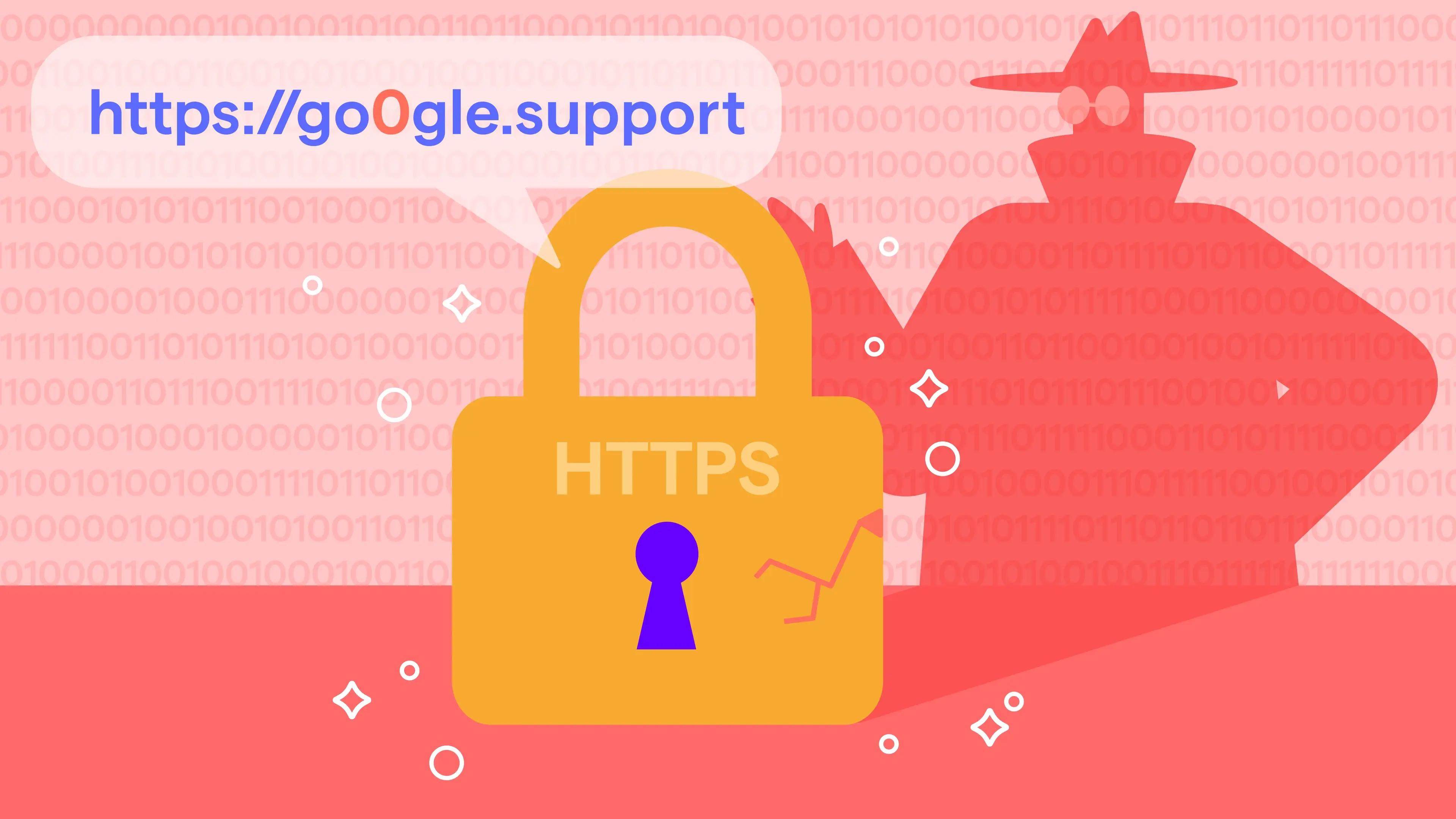
Trusting HTTPS Could Be Your Biggest Mistake - Here’s Why
Biometrics Are Here: Are We Ready for the Human Risks?
I’m a Human Risk Manager (I Think?)

How to Run a Cybersecurity Awareness Training Program in Academia
Phishing in 2025: Cybercriminals Are Smarter Than You Know
Cybersecurity's Comfort Zone Problem
Turning Employees into Payment Security Champions: Your Guide to Free PCI Awareness Training
AI Phishing: The Rising Threat of Intelligent Cyber Deception

What Maslow’s Hierarchy of Needs Reveals About Cybersecurity Flaws
Smishing: The Phishing Attack That Lives in Your Pocket
How Adaptive Security Awareness Training Drives Better Cybersecurity Outcomes: The Science

Quishing: When QR Codes Become Cyber Traps - Your Essential Guide to Protection

TISAX Training: Strengthening Automotive Information Security and Compliance
What Is DORA? DORA Training for Compliance

Risk Quantification for Cybersecurity Human Risk Management
Adaptive SAT: The Future Is Now

Behavioral Analytics Are Changing Cybersecurity
Cybersecurity Awareness Training for Remote Workforces
Would You Skip an Update if You Knew What It Could Cost You?
Your Password Isn't Enough: Why Your Digital Life Needs Multifactor Authentication Today

Your Cybersecurity Is Only as Strong as Your People
What is Cybersecurity Human Risk Management? What You Need to Know

Engagement Strategies for Cybersecurity Human Risk Management
Adaptive Security Awareness Training for Frontline Workers
Human Risk Management's Eight Dimensions of Secure Behavior Segmentation
State-Sponsored Phishing Attacks Target 40,000 Corporate Users: What This Means for Protecting Your Business
Adaptive Security Awareness Training: Unlearning and Relearning Routines
Did You Think Your Password Was Secure? Let’s Talk Password Security

Rethinking Security Awareness: Towards a Cybersecurity Human Risk Management Framework
Password Security: Why the UK is Banning Generic Passwords