






Upgrade your legacy SAT program

Your legacy SAT platform did its job. The job changed.

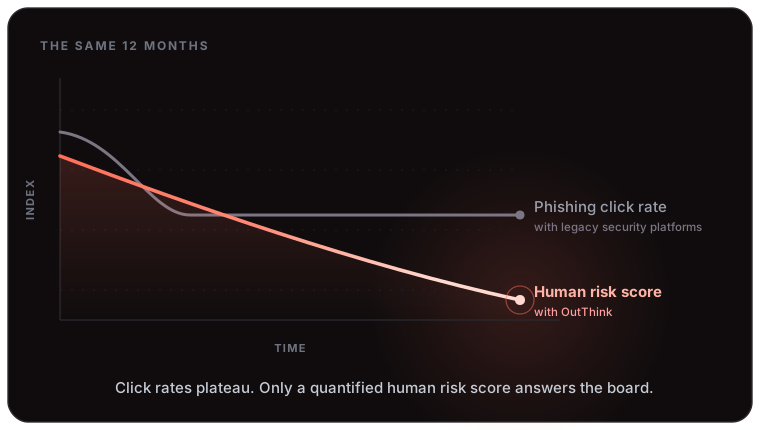
Completion is at 96%, click rate plateaued at 7%. The tool isn't failing for lack of effort. It was built to tick a compliance box, not to drive secure behaviors and reduce risk.

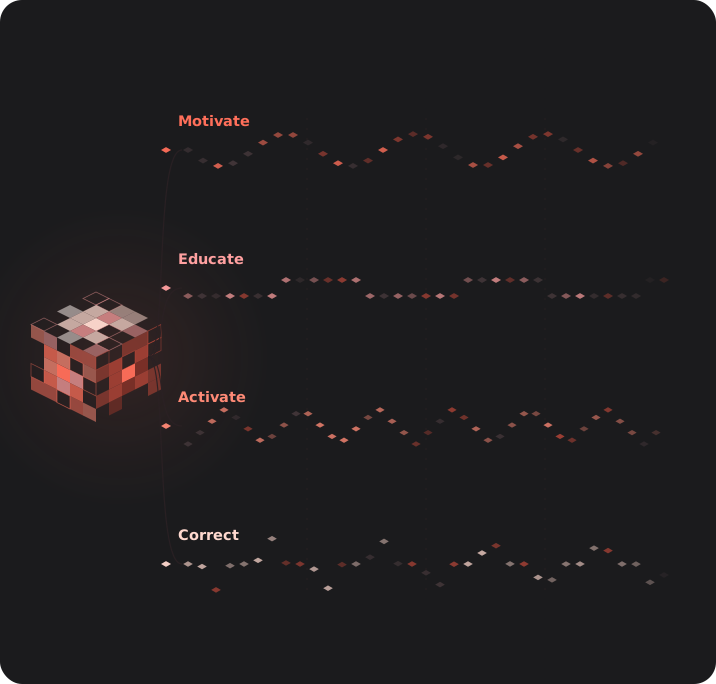
OutThink is the AI Human Risk Management platform that replaces the legacy SAT program - not with a bigger content library, but with a system that motivates, educates, activates and corrects every person, continuously and autonomously.

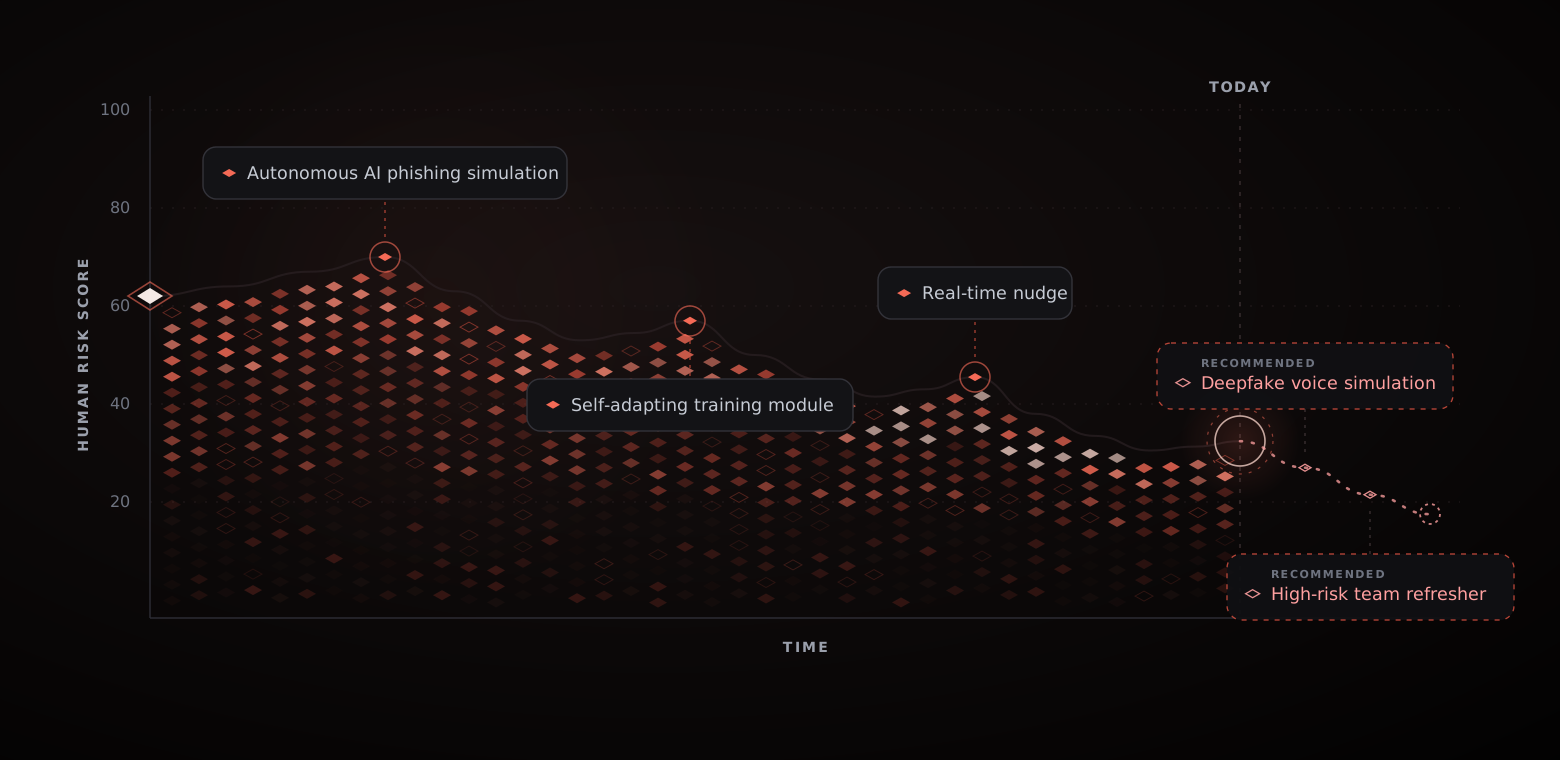
Human risk trend chart highlighting behavior interventions over time

Why the needle stopped moving

The plateau is the product - not your program

Legacy SAT platforms measure activity - who completed, who clicked - and treat every person identically. Gartner research puts 72% of organizations at this level, and the pattern is the same everywhere: click rates settle at 7-8% and stay there while incidents driven by human error keep rising. Trying harder with the same tool produces the same result.
Human risk signal heatmap and telemetry dashboard

AI broke the assumptions it was built on

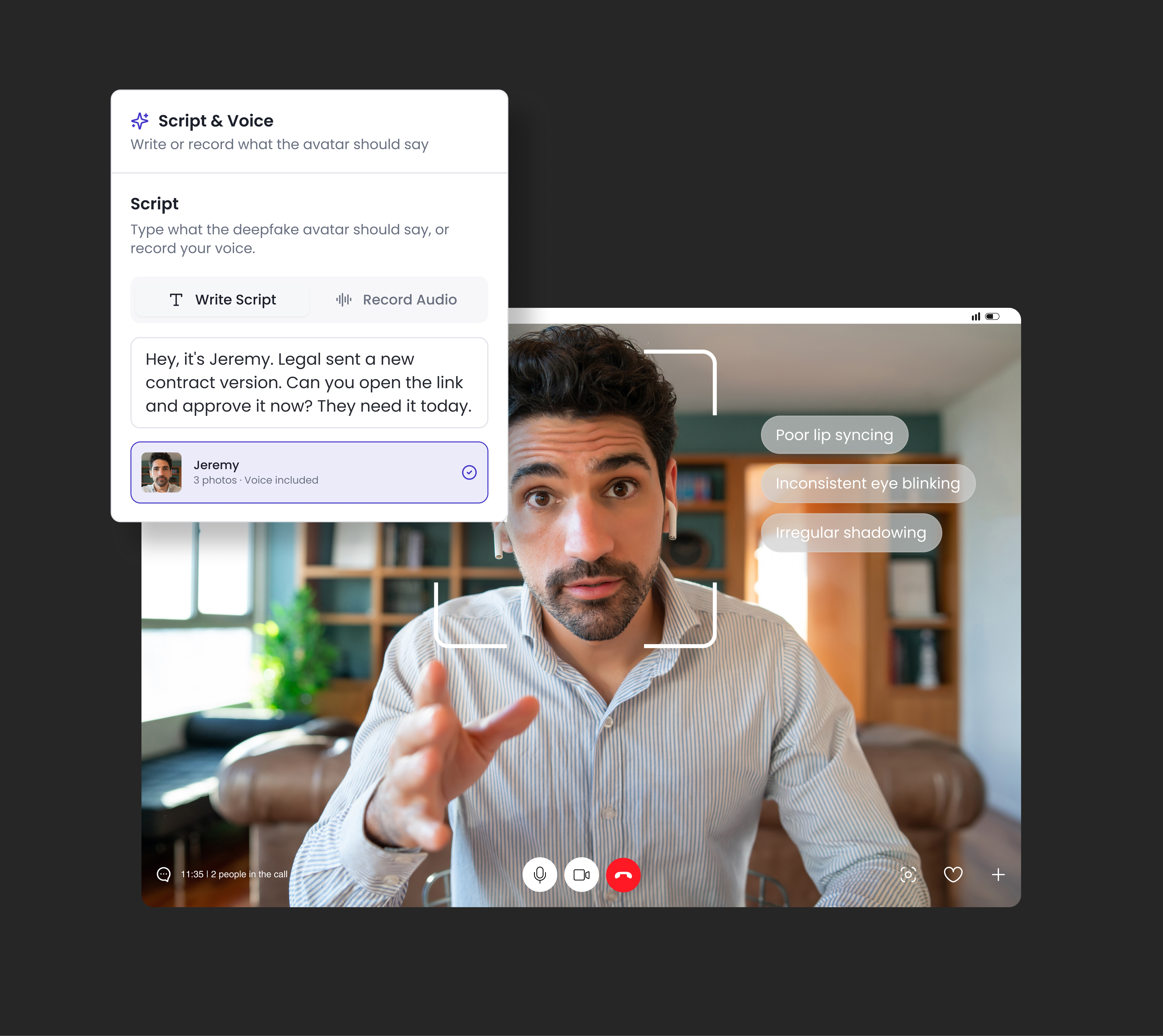
Your annual module was designed for mass phishing with bad grammar. What lands today is individualized - the email that reads like your CFO, the Teams message mid-meeting, the voice note in the CEO's exact cadence. When the attack is continuous and personalized, a quarterly campaign for everyone is not a defense - it's a formality.
Risk distribution and behavioral trend visualization

What upgrading actually means

Four jobs, running themselves - not one job, repeated

Across 100+ enterprise deployments the difference is consistent: programs that change behavior run four jobs continuously - motivate each person (CyberQ), educate them with training generated for their role and behavior (Self Adapting AI SAT), activate them with practice beyond phishing (Cyber Ranges), and correct them at the moment of risk (Nudging Engine). No security awareness manager can run those four jobs manually. The platform does it for you.
Human risk recommendations prioritized by impact

From number to next action

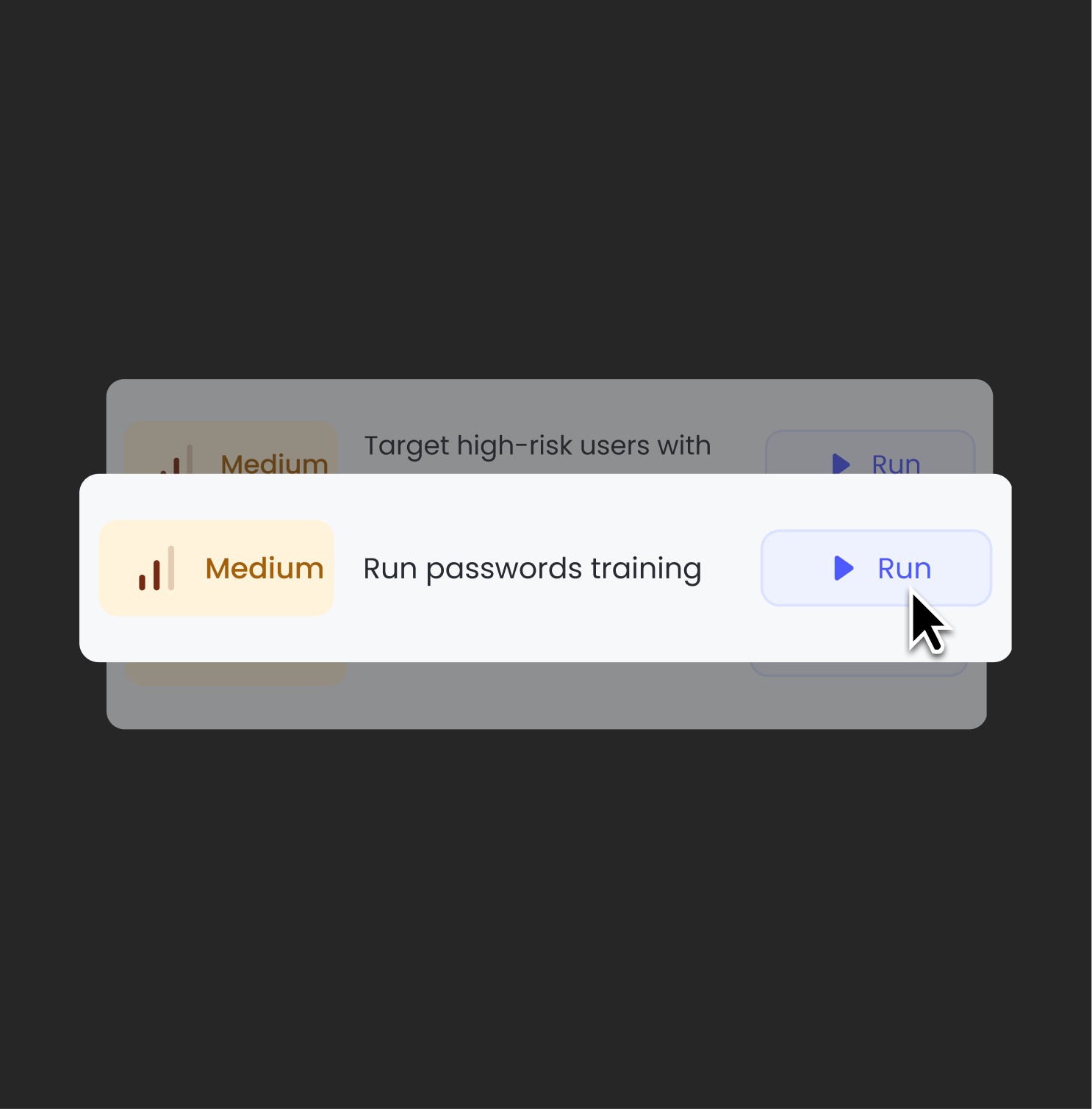
You don't need another dashboard; you need to know what to do next. HRI generates specific, evidence-tied recommendations across people, process and technology - the highest-ROI moves, ranked. Some run automatically, some you approve, some you action. Risk context also flows into the decisions your SOC and GRC teams already make, so incidents get triaged with the person's real risk in view.
CyberQ individual competence score dashboard

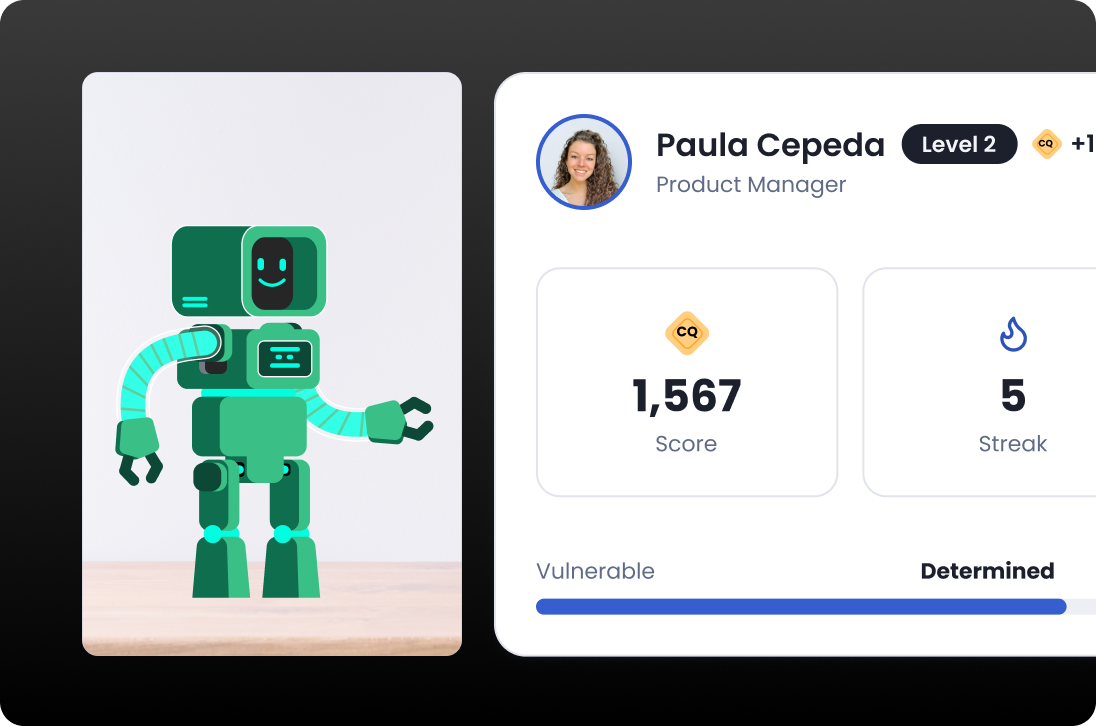
Give every person their own number

Beneath the organizational score, CyberQ gives each individual a cyber-competence score they own and improve like any professional skill - honest enough to slip when behavior slips. When you're ready and governance is in place, CQ can feed appraisals, recognition and incentives. Motivation becomes measurable; the Board metric gets a workforce engine underneath it.

High quality training that's not old and outdated, but new and exciting, helps increase engagement. It has been far more helpful than expected to the security team in building a robust security culture.

Sigita Andrulionyte, Security Awareness Lead, Danske Bank

99.2% engaged training completion

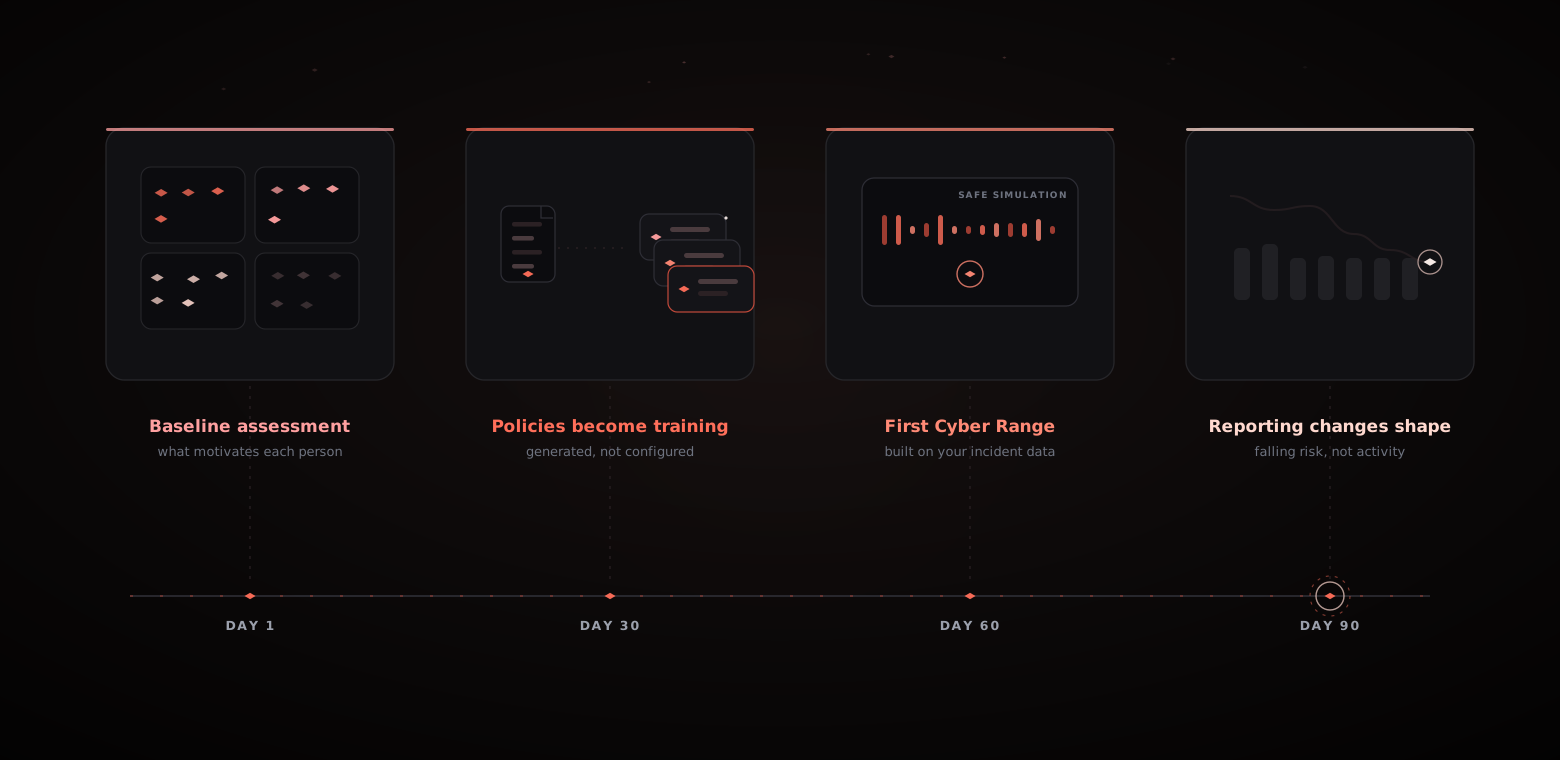
What changes in the first 90 days

A baseline assessment surfaces what motivates each person. Your policies become organization-specific training - generated, not configured. Your first Cyber Range runs on the behavior your incident data fears most. And your reporting changes shape: evidence of falling risk, not activity.

A simulated IT Services phishing email opened inside a Cyber Range

Stop renewing the past. Start reducing risk.