Can You Trust It? Spotting AI Fakes and Impersonation
When the fake looks real.
Someone is pretending to be them, or to be someone they trust. Learn to catch cloned voices, fake accounts, and AI-built messages before hitting reply.
The same AI-powered scams targeting your organization this month are following your employees home, onto their kids' phones, into their group chats, their feeds. No filters, no IT team, just instinct.
This is something you can actually hand them: four short modules built to speak directly to families, in their language, not a compliance deck's.
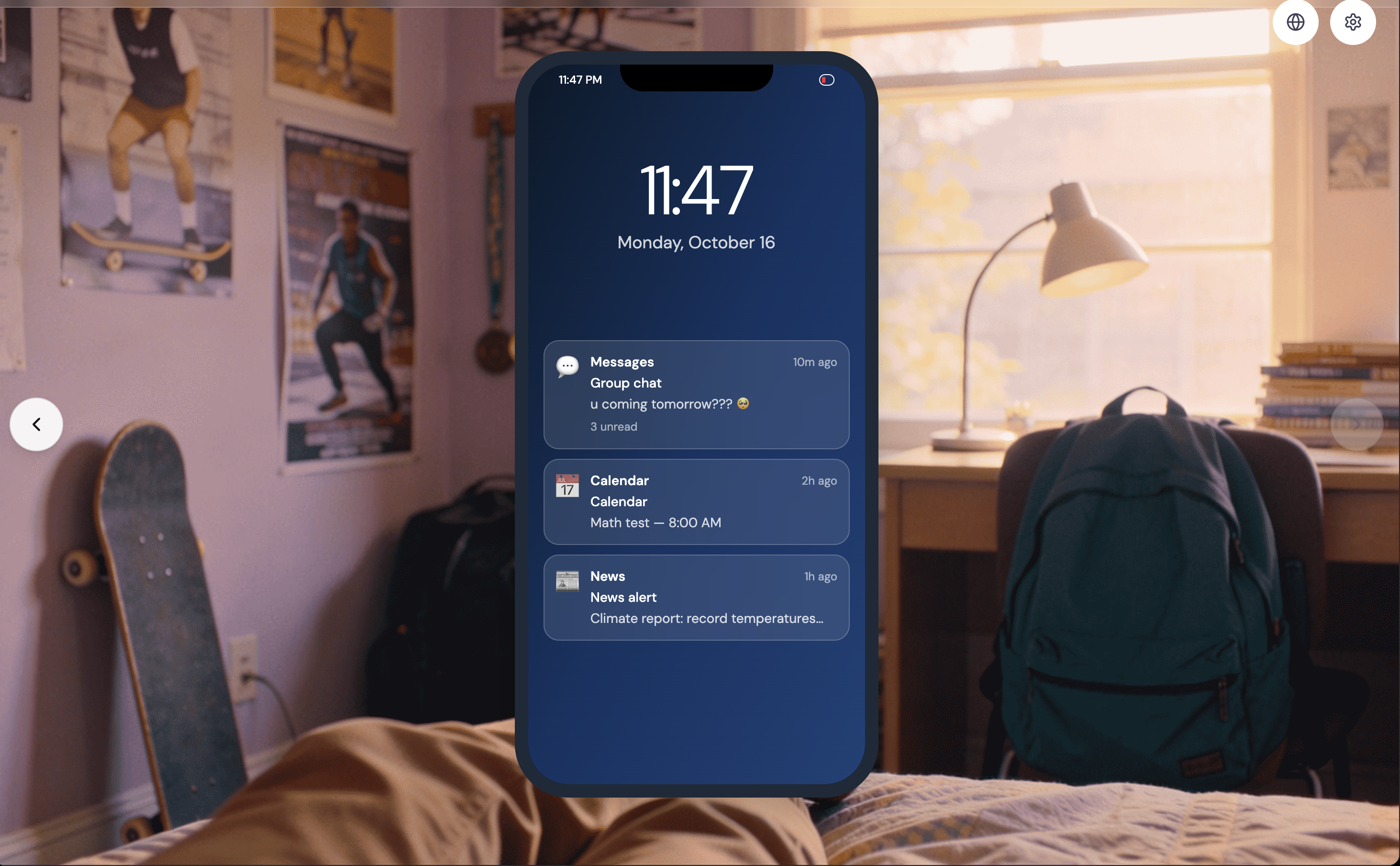
No one has to be the expert, and it doesn't need to be a big sit-down talk. Each module is short, made for kids to watch on their own, in a voice that actually holds their attention. Your people can pick the one that fits, send it over, or watch it together, whatever works for their family. Either way, it opens a conversation that's easy to keep putting off.
When the fake looks real.
Someone is pretending to be them, or to be someone they trust. Learn to catch cloned voices, fake accounts, and AI-built messages before hitting reply.
The internet loves a good disguise.
Understand the risks that can appear in games, chats, and communities, including scams, oversharing, and reputation damage, and learn how to stay protected.
Your mind matters.
Learn how social media, comparison culture, and constant notifications can affect wellbeing, and discover practical ways to build healthier digital habits.
One moment that follows you.
One post. One screenshot. What they share now becomes the trail a stranger, or a recruiter, finds years later.
The habits your team builds this month are worth just as much at the dinner table. Send these along. That’s the whole idea.
Back to the CSAM 2026 pack